
Promote intercultural learning and dialogue between young people from Europe and Sub-Saharan Africa.
Project 01CompletedYouth Exchange
Safe Spaces, Strong Voices
Malawi Team Participation in the Erasmus+ Youth Exchange
An Erasmus+ Youth Exchange bringing young people from Malawi, Zimbabwe, Denmark and Spain together through intercultural learning, inclusion, youth participation, sustainability and social cohesion. Participants used non-formal education, practical workshops and collaborative activities to strengthen leadership, communication, teamwork and sustainability skills while co-creating ideas for locally led Green Safe Spaces.
- Location
- CEULAJ, Mollina, Málaga, Spain
- Dates
- 8–16 June 2026
- Countries
- Malawi · Zimbabwe · Denmark · Spain
- Malawi delegation
- 6 participants + 1 group leader from Malawi
Project overview
Building safe spaces through reciprocal learning.
Safe Spaces, Strong Voices formed part of the wider Co-Creating Green Safe Spaces (CGSS) Capacity Building in the Field of Youth project. The exchange brought together youth organisations from Europe and Sub-Saharan Africa to strengthen youth work, create opportunities for young people across borders and use non-formal education to respond to social and environmental challenges.
SURCOD participated as the Malawi partner alongside organisations from Denmark, Spain and Zimbabwe. The exchange created a practical learning environment in which young people could learn from one another, examine inclusion and social cohesion, explore sustainability and develop ideas they could adapt within their own communities.
Related SURCOD programme
Youth & Digital Innovation →Objectives
What the exchange set out to achieve.
Create safe spaces where young people can express their views, share experiences and engage in dialogue on inclusion and diversity.
Encourage active youth participation and civic engagement through peer learning and youth-led initiatives.
Address discrimination, polarization and exclusion through non-formal education.
Build empathy, critical thinking and cross-cultural understanding to strengthen inclusion and social cohesion.
Develop practical sustainability, community-building and leadership skills that young people can apply at home.
Methodology
Youth-centred, experiential and participatory.
The exchange used a youth-centred, experiential and participatory methodology. Non-formal education, intercultural exchange and hands-on youth-led activities positioned participants as active contributors to their own learning while strengthening the capacity of participating organisations to deliver inclusive youth work.
Activities
- Name games, energisers and team-building exercises to create group cohesion and a sense of safety.
- Workshops on discrimination, stereotypes and anti-polarization using role-play and simulation methods.
- Sustainability sessions exploring climate-smart practices, agroecology principles and water conservation.
- Intercultural learning exercises through which each delegation presented its culture, language, music and cuisine.
- Daily reflection groups to consolidate learning, process emotions and strengthen peer support.
- Collaborative mixed-nationality project work to design ideas for local Green Safe Spaces.
- Intercultural evenings celebrating traditions, food, music and customs from each participating country.
Malawi team contribution
Local knowledge brought into an international exchange.
- ✓Led learning on community-led development approaches, drawing on SURCOD's experience in village savings groups and sustainable agriculture.
- ✓Presented the Malawian context of youth participation, gender equality and rural development.
- ✓Shared practical knowledge on climate-smart practices relevant to the Green Safe Spaces model.
- ✓Prepared and served Malawian dishes and shared cultural traditions during the intercultural evening.
- ✓Worked in mixed-nationality teams to co-design ideas for Green Safe Spaces that could be piloted in Malawi.
Learning outcomes
Skills, confidence and perspectives participants could carry home.
Intercultural competence
Daily interaction with peers from Denmark, Spain and Zimbabwe strengthened appreciation of diversity and cross-cultural understanding.
Communication & teamwork
Collaborative work and peer facilitation strengthened communication, teamwork and leadership skills.
Inclusion & social cohesion
Participants developed a deeper understanding of marginalized youth, migrant communities and inclusive participation.
Critical thinking
Workshops strengthened participants' ability to examine stereotypes, discrimination and polarization and respond constructively.
Youth participation
The exchange provided practical models for youth-led participation, community engagement and Green Safe Spaces initiatives.
Sustainability skills
Participants explored agroecology, water conservation and eco-entrepreneurship practices applicable in rural Malawian contexts.
Impact and follow-up
The exchange increased participants' confidence, leadership abilities and international networks. The Malawi delegation returned with a broader understanding of global social issues, greater appreciation for cultural diversity and new ideas for youth-led initiatives and community development activities in Malawi.
Follow-up ideas identified by participants included community awareness activities and development of a local Green Safe Space pilot supported by SURCOD, extending the learning beyond the exchange itself and grounding it in local realities.
Project gallery
Moments from the exchange.
A visual record of intercultural learning, cultural exchange and the Malawi delegation's participation in Spain.
Featured moment
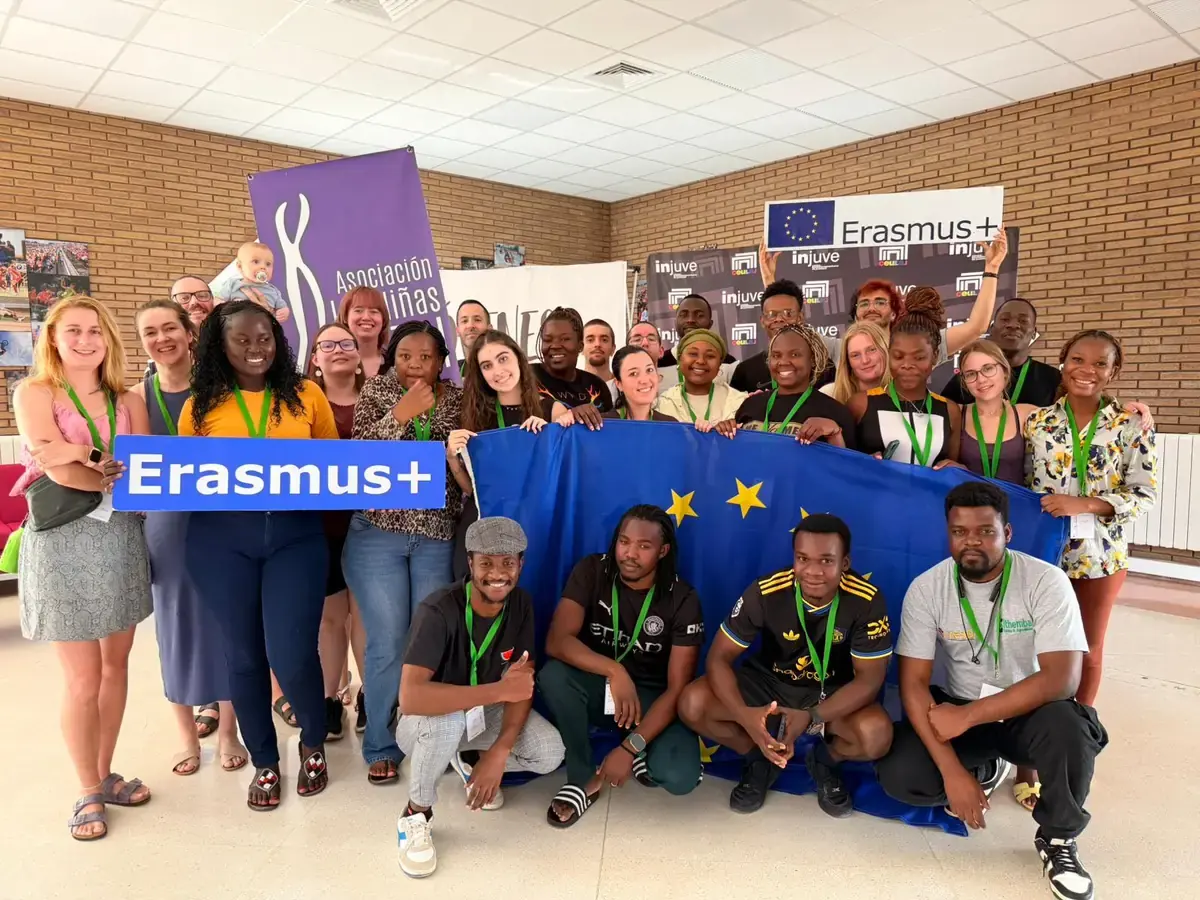
01 of 10Participants from the four partner countries together during the youth exchange at CEULAJ.
Photos advance automatically every 6 seconds. Swipe the gallery on mobile or select any moment to feature it immediately.
Partners
A reciprocal Europe–Africa partnership.
The project was co-funded through the Erasmus+ Programme of the European Union.
Søholm 4H
Denmark
Coordinator
Las Niñas del Tul
Spain
Host
RETZ
Zimbabwe
Partner
SURCOD
Malawi
Partner
Explore more